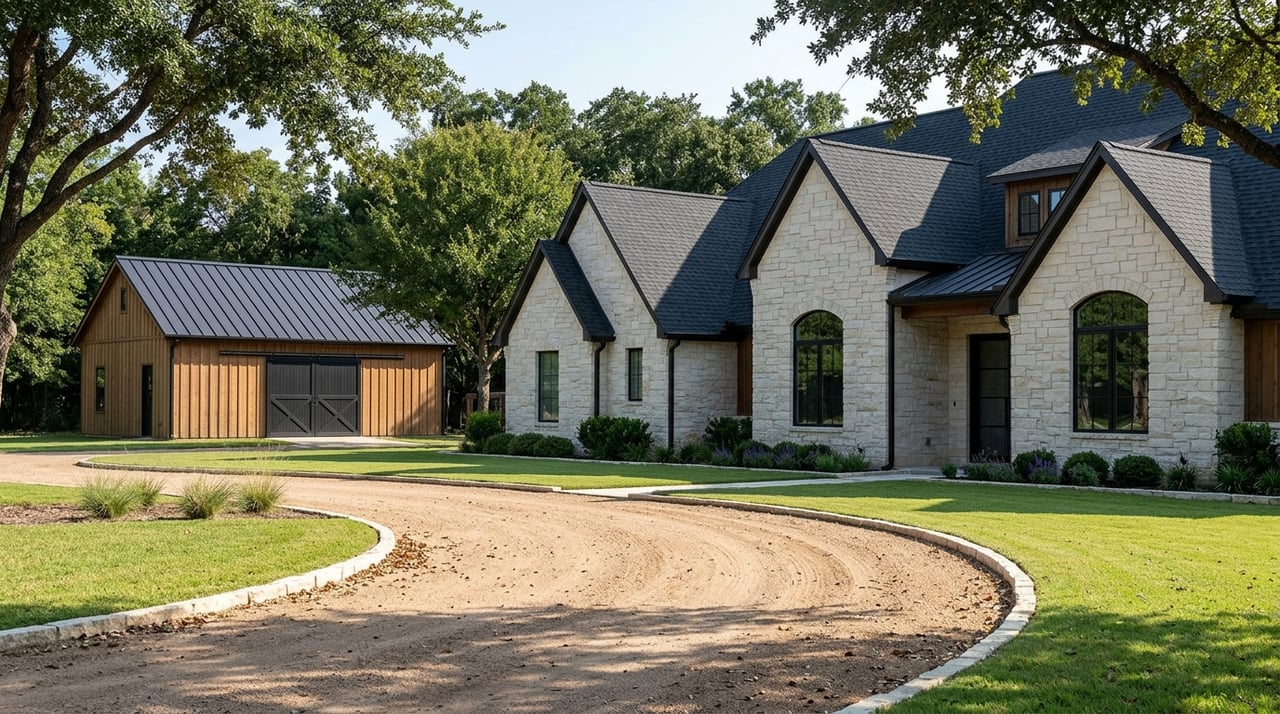
Looking for room to breathe without giving up access to the Dallas-Fort Worth area? Lucas offers a rare mix of large lots, a semi-rural setting, and an upscale housing profile that feels different from many nearby suburbs. If you are drawn to space, horse-friendly possibilities, and a quieter daily pace, this guide will help you understand what living in Lucas really looks like. Let’s dive in.
Why Lucas Stands Out
Lucas is a small city in southeastern Collin County with a distinctly low-density feel. City planning documents describe it as a semi-rural suburban community with large residential lots, natural open spaces, and estate-style living within the DFW Metroplex.
That identity shows up in the numbers too. The latest Census estimate places the population at 8,840, with a 92.3% owner-occupied housing rate, a median owner-occupied home value of $941,900, and a median household income of $221,364. In simple terms, Lucas is not built around dense, entry-level housing. It is a market shaped by long-term ownership and space.
What Quiet Living Means in Lucas
Quiet living in Lucas does not mean isolated living. It means a more spacious residential pattern, fewer commercial pockets, and a daily rhythm that centers more on home, land, and outdoor living than on walkable retail.
The city spans about 10,323 acres, and its comprehensive plan says roughly 75% is developed, with the rest still vacant or tied to agricultural-related uses. That balance helps preserve the open feel many buyers want when they start looking beyond more built-out suburban areas.
Space Is a Core Part of the Appeal
If you are searching for a property where lot size matters, Lucas deserves a close look. The city’s planning framework emphasizes large-lot housing rather than compact subdivisions, which gives many homes a stronger sense of separation and privacy.
For buyers moving from denser parts of Collin County or North Dallas, that can be a major lifestyle shift. You may find more room for outdoor entertaining, hobbies, future improvements, or simply the peace that comes from having more distance between homes.
Horse-Friendly Living Is Part of the Identity
Lucas is one of those places where horses are not just a marketing theme. The city’s zoning code specifically addresses equestrian uses, which is an important distinction for buyers who want land that supports a certain lifestyle.
The eastern edge of the city borders Lavon Lake and the Trinity Trail, a 25-mile equestrian and pedestrian trail. That connection reinforces the outdoor, horse-oriented identity that sets Lucas apart from many nearby communities.
What the Zoning Code Allows
Lucas defines equestrian boarding as a business on at least two acres and up to five acres, with a maximum of two horses per acre. On lots over five acres, that cap does not apply.
The code also defines equestrian facilities broadly. It includes boarding, training, riding lessons, breeding, rescue, and shows, and it classifies farm or ranch use to include horses, cattle, and sheep.
Why Private Restrictions Still Matter
Even if a property appears horse-friendly under city rules, that is not the end of the story. Lucas makes clear that its zoning standards are minimum standards and do not override private covenants, deed restrictions, easements, or HOA rules.
That means a parcel may look workable on paper but still carry private restrictions that limit animal use. If horses are part of your plan, you will want to review lot size, zoning, and private restrictions together before moving forward.
The Reality of Owning Acreage
A larger property can give you more freedom, but it also comes with more day-to-day responsibility. In Lucas, that often means paying closer attention to land maintenance, irrigation, utilities, and improvement rules than you would on a smaller suburban lot.
For the right buyer, that tradeoff is worth it. You gain room, flexibility, and a more relaxed setting, but you should go in with clear expectations about upkeep.
Watering Rules Matter
Lucas enforces seasonal outdoor watering rules from April 1 through October 31. During that period, outdoor watering is allowed only two days per week and only before 10 a.m. or after 6 p.m.
That matters on large lots where landscaping and irrigation can become a meaningful part of ownership. The city also notes that repeated violations can lead to administrative fees of $500 and then $2,000, so this is not a minor detail.
Groundskeeping Takes Planning
Pastoral does not mean unmanaged. Lucas states that the maximum grass height is 12 inches, which is a practical reminder that larger lots still require regular maintenance.
If you are considering a property with more land, it helps to budget not just for the purchase but also for ongoing mowing, irrigation monitoring, and seasonal upkeep. The extra space is a major benefit, but it usually comes with a bigger maintenance routine.
Septic and Permits Can Be Part of the Process
On acreage properties, infrastructure questions matter. Lucas requires permits for new construction and for buildings over 200 square feet, and its single-family inspection process includes Collin County septic tank approval, grading for water flow, and a water meter inspection.
For buyers considering additions, workshops, barns, or other improvements, that process is worth understanding early. It is another example of why buying in Lucas can require a little more planning than buying in a more typical suburban neighborhood.
Daily Life Is Car-Oriented by Design
Lucas offers a quieter setting, but it is not designed around walkable shopping districts. The city’s own planning documents support limited commercial growth in order to preserve the rural atmosphere, which means many daily errands will likely involve a drive to neighboring communities.
For some buyers, that is exactly the point. You are choosing Lucas for land, openness, and a less commercial environment, while still staying connected to the broader Collin County suburban network.
Roads Connect Lucas to the Region
Getting around Lucas is largely about road access. City roadway pages highlight ongoing work on FM 1378, West Lucas Road, East Lucas Road, Angel Parkway, and the FM 1378/FM 3286 intersection.
The city also says it is in year one of a five-year street maintenance plan focused on improving road conditions citywide. For buyers, that points to a community where mobility is tied to driving rather than mixed-use density.
Local Amenities Are Modest but Meaningful
Lucas keeps community life small-scale. Lucas Community Park includes a paved walking trail, playground, and pavilion, and the city hosts the Lucas Farmers Market from April through October on the second and fourth Saturdays.
The city also organizes events such as Founders Day and Movie in the Park. These amenities help create a local community feel without changing the fact that Lucas remains primarily residential and low density.
School District Boundaries Vary by Address
One practical detail many buyers should note is that Lucas addresses may be served by different school districts. The city lists Allen, Lovejoy, McKinney, Plano, Princeton, and Wylie districts as serving different parts of Lucas.
Because boundaries can vary by property, it is smart to confirm district assignment for any home you are seriously considering. In a city with larger lots and varied development patterns, address-level verification matters.
Who Lucas Often Fits Best
Lucas tends to appeal to buyers who want a high-end home setting with more breathing room. That can include households relocating within Collin County, buyers searching for acreage, or anyone drawn to a quieter environment with horse-friendly potential.
It may be an especially strong fit if you value privacy, outdoor space, and a home-centered lifestyle. If you prefer dense retail, shorter errand runs, or a more urban pattern, another area may feel more convenient.
What To Check Before You Buy
In Lucas, details matter. A beautiful property can still come with important limitations or responsibilities that affect how you use the land.
Here are a few items worth checking early:
- Lot size and zoning classification
- HOA rules, deed restrictions, and easements
- Whether the property uses septic and what future improvements may require
- Utility setup for water, trash, and recycling
- Irrigation demands and seasonal watering compliance
- Ongoing groundskeeping needs for the size of the lot
- Road access and drive times for your daily routine
Why Local Guidance Helps in Lucas
Lucas is not a one-size-fits-all market. Two properties with similar price points can offer very different experiences depending on lot size, private restrictions, infrastructure, and long-term usability.
That is where local market knowledge becomes valuable. When you are evaluating luxury homes, acreage, or horse-friendly possibilities in Collin County, the details behind the listing can matter just as much as the home itself.
If you are exploring Lucas and want a clear, concierge-level view of what fits your goals, The Deann Abbott Group can help you compare properties, understand the nuances, and move forward with confidence.
FAQs
What makes Lucas, Texas different from nearby Collin County suburbs?
- Lucas is defined by low-density housing, large residential lots, natural open spaces, and limited commercial growth, which creates a quieter and more spacious setting than many nearby suburbs.
Can you keep horses on a property in Lucas, Texas?
- Possibly, but it depends on the parcel’s lot size, zoning, and any private deed or HOA restrictions. City rules may allow horse-related uses, but private restrictions can still be stricter.
Is Lucas, Texas a good fit if you want acreage?
- Lucas can be a strong option if you want more land, but you should be ready for added responsibilities such as irrigation compliance, mowing, and checking permit or septic requirements for future improvements.
How do daily errands work when living in Lucas, Texas?
- Lucas is car-oriented, and many everyday shopping and service trips will likely take you into neighboring Collin County communities because the city limits commercial growth.
What should buyers verify before purchasing a home in Lucas, Texas?
- Buyers should confirm zoning, lot size, deed restrictions, HOA rules, septic status, utility setup, and how the property’s maintenance needs fit their lifestyle.