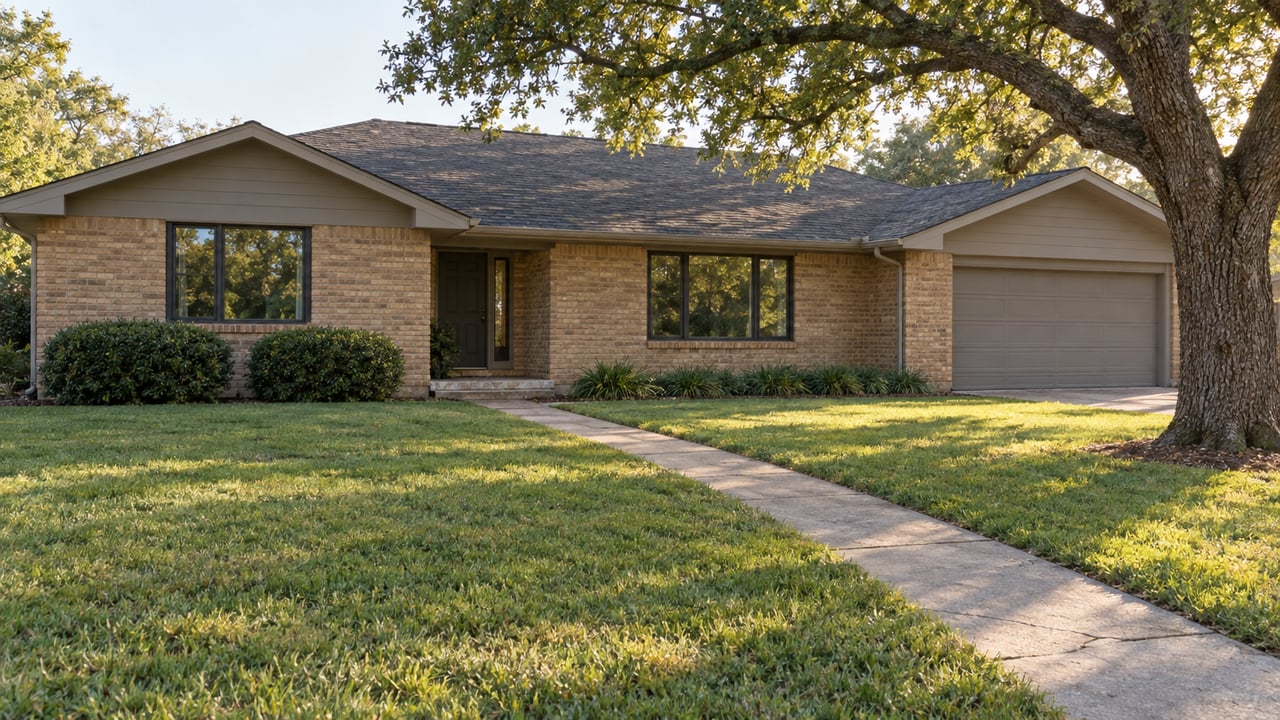
An inspector on Chisholm Trail Court, a street of low brick ranches inside Pitman Creek Estates, flags something in the attic junction boxes before he's even finished the crawl space. He writes three words on the report: aluminum branch wiring. The buyer's agent calls the listing agent within the hour. The seller, who has lived in the house for close to thirty years and never had a fire, a flicker, or a claim, suddenly hears the word rewire and starts doing math on a number nobody has actually given them yet.
That gap between the word on the inspection report and the number that eventually lands on the closing statement is where most of the friction in these deals actually lives. Not in the wiring itself.
The eight-year window baked into the neighborhood
Plano's residential building boom didn't happen all at once. City planning staff describe it as a long run stretching from the 1960s through the year 2000, with retail following the rooftops as each wave of subdivisions filled in. The earliest of those waves landed squarely inside a narrow national window, roughly 1965 to the mid-1970s, when copper prices spiked and builders across the country switched to aluminum for branch circuit wiring because it was cheaper and easier to pull through a wall.
Pitman Creek Estates is one of the Plano neighborhoods that sits inside that window, with homes dating from the 1970s into the 1980s on quarter-acre lots. It is not the only one. Any Plano street built during that same stretch carries the same odds, whether or not the wiring has ever caused a problem. The material itself isn't automatically dangerous. What changes over decades is that aluminum expands and contracts more than copper with temperature swings, which gradually loosens the connections at outlets and switches and can generate heat without any visible warning sign.
That's a physical fact about the metal. What turns it into a transaction problem is a form.
What the checkbox is actually asking
Texas Property Code Section 5.008 requires sellers of most residential property to complete a written disclosure notice, and aluminum wiring is one of the specific conditions the form asks about by name, alongside things like termite damage and flooding. The statute's own language is blunt about what the form is and isn't: it's "a disclosure of seller's knowledge of the condition of the property as of the date signed," not a warranty and not a substitute for an inspection.
A seller who genuinely doesn't know what's behind the drywall can and should answer "unknown." But Texas courts have been clear that a seller can't use "unknown" to dodge something a reasonable homeowner would have noticed, and if the seller has lived in the house since the Ford administration, that defense gets thinner by the year. For listing agents, the stakes are personal too. Failing to disclose known aluminum wiring can expose both seller and agent to claims under the Texas Deceptive Trade Practices Act, which allows for damages up to three times the actual loss, on top of whatever the Texas Real Estate Commission decides to do with a license.
So the box gets checked "yes." And that's the moment most people in the deal start assuming the worst.
The number everyone assumes versus the number insurers actually require
The instinct, on both sides of the table, is to treat "aluminum wiring" as shorthand for "full rewire," a project that means opening walls, patching drywall, and a bill that can run into the tens of thousands. That instinct is usually wrong, and the gap between what people fear and what actually satisfies an insurance underwriter is the single biggest thing worth knowing before anyone reaches for a price reduction.
The Consumer Product Safety Commission-approved fix for aluminum branch circuit wiring is called pigtailing: a licensed electrician attaches a short length of copper wire to the existing aluminum wire at each connection point using approved connectors, commonly AlumiConn or Ideal 65 hardware. It's accepted by Texas insurance carriers as a legitimate remediation method when it's done by a properly licensed contractor with permits pulled and documentation filed. A full rewire is also accepted, but it's rarely the cost-effective choice when pigtailing is available and done correctly.
Here's roughly what each path costs in the DFW market:
| Remediation | Typical cost | What it resolves |
|---|---|---|
| Pigtailing, per connection | $90 to $110 | Individual outlets, switches, fixtures flagged during inspection |
| Pigtailing, whole house | $3,500 to $10,000+ | Every branch circuit connection in the home |
| Electrical panel replacement (if also flagged, e.g. an FPE Stab-Lok panel) | $2,500 to $5,000+ | Panel-level fire risk separate from the branch wiring itself |
A whole-house pigtailing job, even at the high end, is a fraction of what a buyer imagining a full rewire tends to picture. That's useful information for a seller heading into negotiations and equally useful for a buyer deciding whether a request for repair credit is proportionate or padded.
What it means once the offer is signed
Insurance is the other place this shows up, and it moves on a different track than the sale itself. Carriers in Texas routinely require an interior inspection on older homes before binding a standard policy, and if that inspection turns up unremediated aluminum wiring, the options are a rate surcharge, a decline, or a modified policy form. Once a licensed electrician completes the pigtailing or rewire, pulls the permit, and provides a Certificate of Electrical Inspection from the city along with a Letter of Completion, most carriers will remove the surcharge and restore standard coverage. Without that documentation, a verbal assurance that "it's been looked at" typically isn't enough to move the underwriting needle.
That paperwork trail matters for negotiating leverage too. Unmitigated aluminum wiring tends to create the kind of 2 to 5 percent price concession pressure that shows up in DFW deals once it's flagged, according to electricians who work these transactions regularly across the metro. A documented, already-completed remediation removes that pressure almost entirely, because there's nothing left to negotiate around.
Anyone hiring an electrician for this work should confirm the contractor holds an active Texas Electrical Contractor License, which can be verified directly through the Texas Department of Licensing and Regulation's public license search. That single step separates a contractor whose paperwork will satisfy an insurance carrier from one whose work, however competent, won't clear underwriting.
Why the timing matters more this year than it might have three years ago
Plano closed out 2025 with a median home price of $540,000, essentially flat year over year, and heading into the fall of 2026, inventory across the city remains tighter than it was a year earlier even as buyer urgency has cooled from the peak years. The market has settled into something closer to balanced, where outcomes depend more on a given property's condition and pricing than on broad momentum carrying every listing along with it.
In that kind of market, a buyer who might have waived an inspection contingency in 2021 is now far more likely to actually use the option period to request something, and a flagged aluminum wiring item is an easy, well-documented ask. A seller in one of Plano's original neighborhoods who addresses it before listing, rather than waiting to negotiate it after an inspection report lands, is working from a stronger position simply because there's nothing left for a buyer's agent to leverage.
Before the offer gets written
A pre-listing electrical evaluation costs far less than the price concession that an unaddressed aluminum wiring flag tends to generate once it's already in an option period. For a seller in a home built in that mid-1960s to mid-1970s window, the questions worth answering before a sign goes in the yard are simple: has anyone confirmed what's actually in the walls, and if it is aluminum, is there already a permit and a completion letter on file. For a buyer touring a resale in one of Plano's original neighborhoods, the questions are the mirror image: what does the seller's disclosure actually say, and if aluminum wiring is checked yes, has it already been remediated with documentation an insurance carrier will accept.
A few questions worth asking directly
Does aluminum wiring mean the whole house has to be rewired? Not usually. Pigtailing with CPSC-approved connectors is an accepted remediation method for both code compliance and most Texas insurance carriers, and it costs a fraction of a full rewire.
Will my homeowners insurance just drop me if my home has aluminum wiring? It depends on the carrier and whether the wiring has been documented as remediated. Some carriers add a surcharge, some require an inspection first, and some will decline outright until the work is done and documented with a permit and completion letter.
How do I find out if my Plano home actually has aluminum wiring? A licensed electrician can confirm it through a visual inspection, often checking for "AL" stamped on the cable jacket in an attic or garage. Build year is a strong clue but not a substitute for that inspection, since not every home from that era was wired with aluminum.
If you're weighing whether to address wiring before listing a Plano home from this era, or you're comparing resale homes where the disclosure raises questions you'd rather sort out before writing an offer, The Deann Abbott Group can walk through what a documented remediation actually looks like in a real transaction and what it's worth asking for at the table.